BAKERYRECIPE · 9 STEPS
Hallabong Coffee Pound Bread
Hallabong Cheong Pound Bread
This is a pound cake recipe using Jeju Hallabong (60%). It’s a pound cake made by incorporating Hallabong into the batter and glaze. The baking process involves 9 steps, starting with butter creaming and ending with baking. It yields approximately 10-12 pieces per pound cake pan (approximately 21 x 9 x 7 cm). Due to the intense sweetness of the Hallabong, we’ve reduced the amount of sugar compared to a regular pound cake.
- Quantity
- One pound mold (approximately 21 x 9 x 7 cm) · 10 to 12 pieces
- Ready.
- 30 minutes (butter and eggs, at room temperature for 1 hour separately)
- Cooking.
- 40 to 45 minutes
- Overall.
- Approximately 2 hours and 45 minutes (including cooling and glazing).
- Difficulty
- Beginner.
INTO CAFE standard design recipe — finalized figures after store testing.
Items used in this recipe.
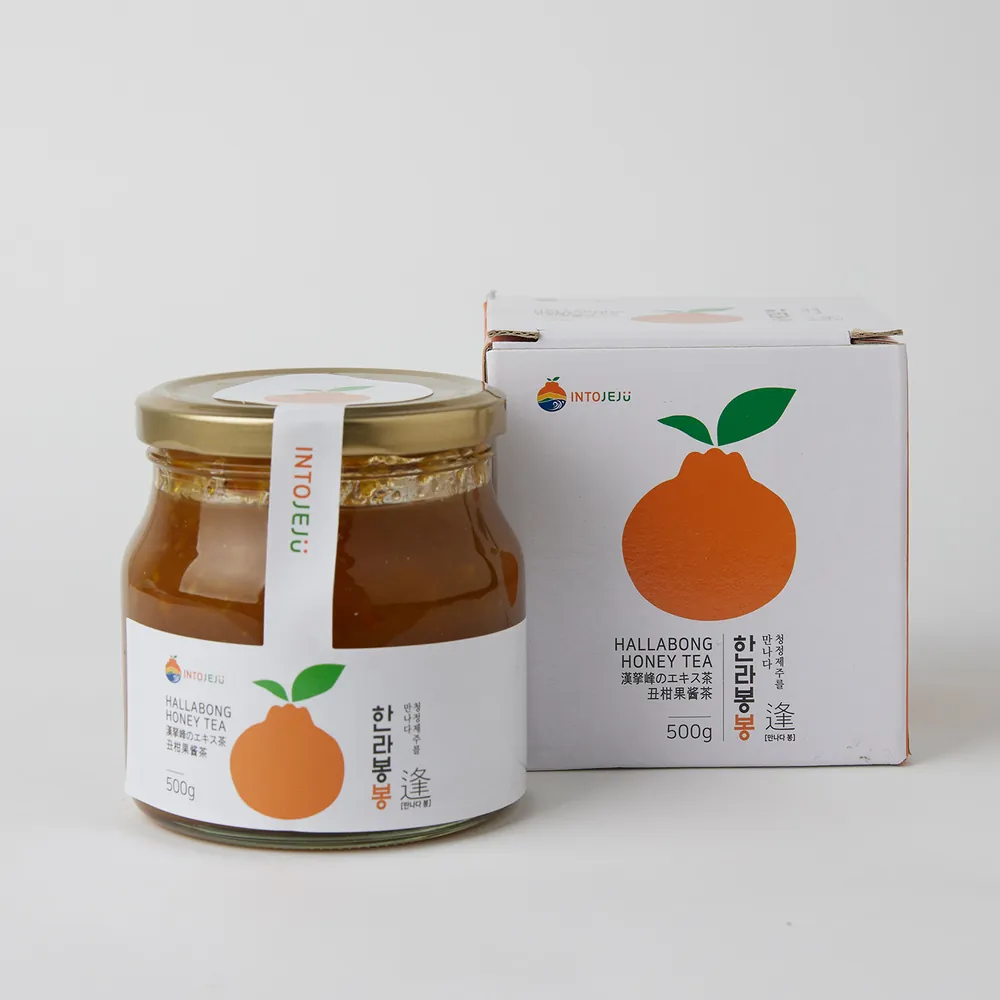
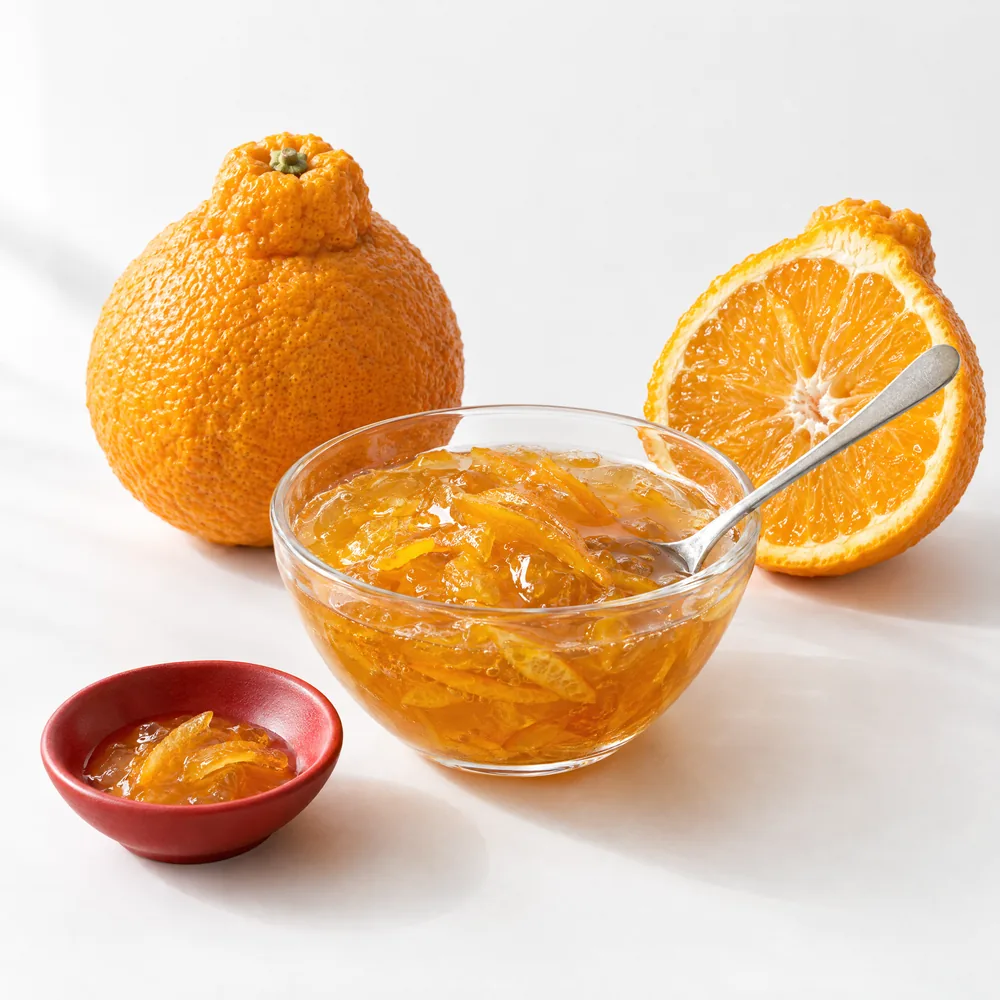
Before starting
- Take butter and eggs out of the refrigerator one hour in advance and leave them at room temperature (20~23°C).
- A hand mixer (or a frother) and a pound mold (approximately 21 x 9 x 7 cm), and an oven are needed. There is no fermentation process.
- Use about 120 g of Hallabong preserve in total: 90 g for the batter, 20 g for the syrup and 10–12 g of the liquid for the glaze.
Materials and tools
Ingredients
| Ingredients | Quantity | Note |
|---|---|---|
| Dough | ||
| Unsalted butter | 100g | Room temperature (20~23°C) · to the point where fingerprints easily appear. |
| Sugar | 70g | Use less sugar than in a regular pound cake because the preserve is sweet · 65 g if using the pouch |
| Salt | 1g | One pinch |
| Egg | 2 (approximately 100g) | Room temperature · Allow to de-gas thoroughly. |
| Hallabong Coffee | 90g | Please grind the debris into pieces of 3 to 5mm, and measure it together with the liquid. |
| Powdered wheat flour | 110g | |
| Almond flour | 20g | Selection: If none is selected, use 125g of ground coffee. |
| Baking powder | 3g | Approximately 2/3 of a teaspoon. |
| Hallabong Syrup | ||
| Hallabong Coffee | 20g | Focusing on the liquid/drink. |
| Hot water | 20g | |
| Glaze | ||
| Sugar powder | 50g | |
| Syrup from Hallabong preserve | 10~12g | Adjusting the concentration, little by little |
| Crushed Mount Hallabong (fruit) | a little | Decoration · Selection |
| Choice | ||
| From Jeju Mt. Hallabong outer skin. | 1/2 piece | Wash thoroughly, and gently grind only the yellow outer skin. |
| Smooth butter | 5g | Within the dough, a line – for addressing cracks. |
| Mixing bowls. | ||
| Parchment paper | Chapter 1 | Cut to size according to the pound template. |
Tool
- Paper molds (approximately 21 x 9 x 7 cm) · parchment paper
- Hand mixer or frother
- Wooden and rubber spatulas
- Body.
- Scale
- Knife·Cutting board
- Wooden skewers
- Silicone brush
- cooling screen
- oven
- Bread knife
How to make/prepare.
-
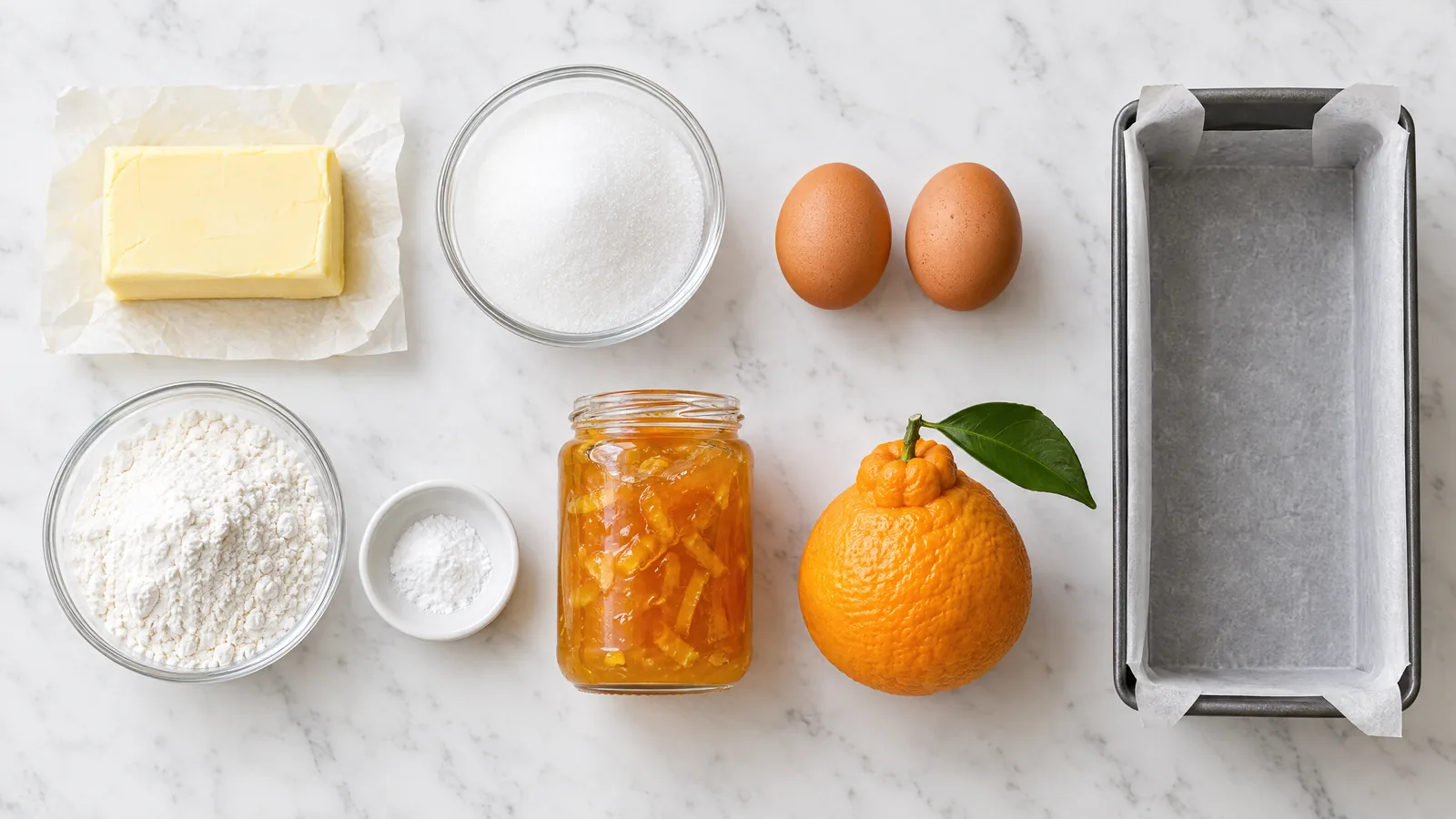
01STEP · B1
Ingredients preparation.
Measure the ingredients, ensuring the butter and eggs are at room temperature, and then prepare the molds and oven.
Butter and eggs should be taken out one hour prior and left at room temperature (20-23°C). The butter should leave an easily visible mark when pressed with a finger – this is the ideal consistency. For flour, almond flour, and baking powder, measure everything together in one container. For Hallabong coffee, remove any lumps and finely chop them into pieces approximately 3-5mm in size, then combine them with the liquid. Line the cake pan with parchment paper, and begin preheating the oven to 175°C (approximately 15-20 minutes).
Checklist
- Butter and eggs, at room temperature for 1 hour (20-23°C).
- Chop the fruit pieces in the Hallabong preserve to 3–5 mm
- Place parchment paper · oven at 175°C, start preheating.
TIP
Measure the Hallabong preserve at the start: 90 g for the batter, 20 g for the syrup and 10–12 g of the liquid for the glaze.
Attention.
Use a clean, dry spoon for the Hallabong preserve. Refrigerate the jar immediately after opening.
-
02STEP · B2
Butter creamification
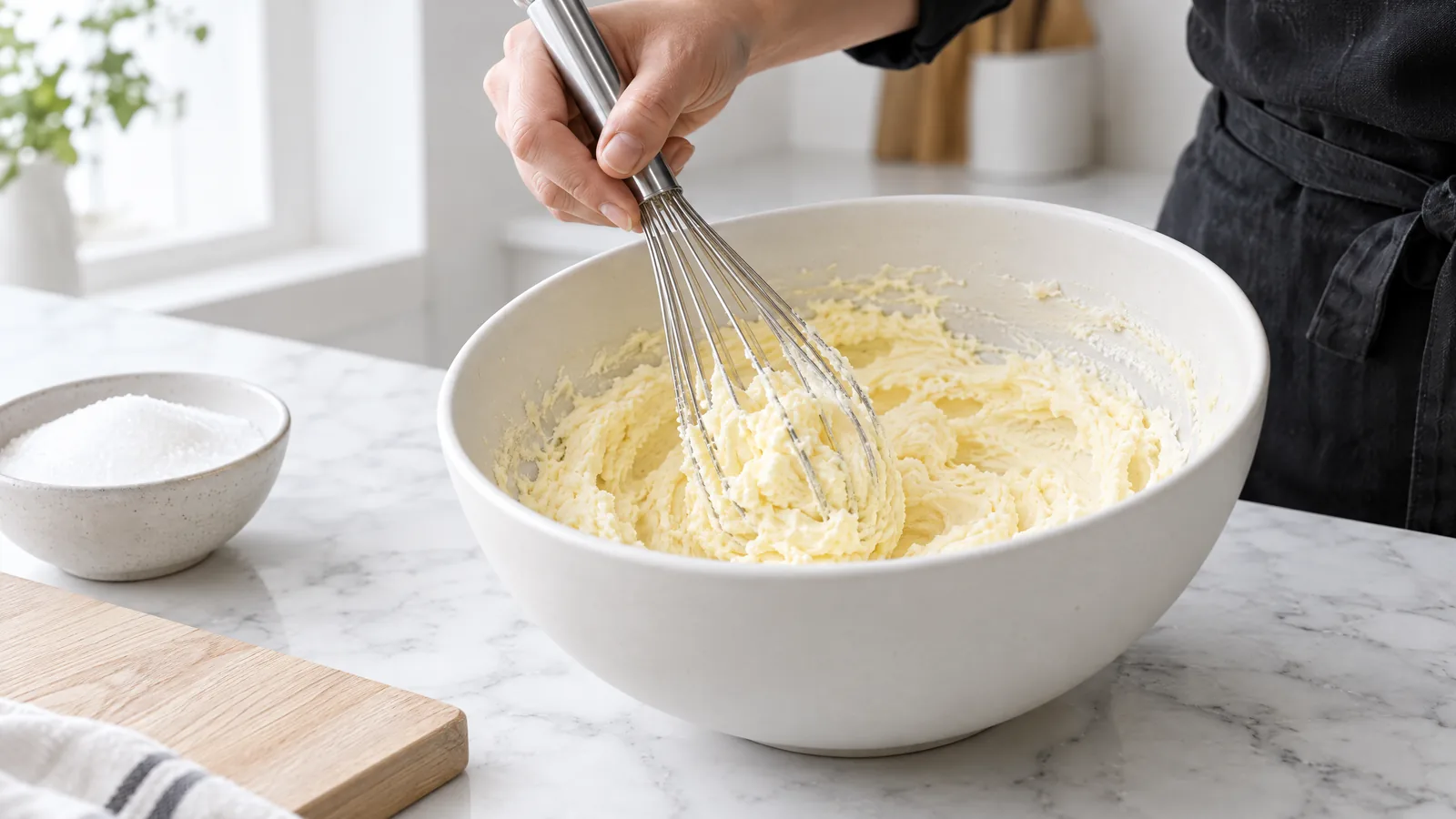
Using room temperature butter, add sugar and salt, and whip it thoroughly until it’s light and airy.
Add 100g of room temperature butter to the bowl and whip it with a hand mixer on medium (or vigorously if using a frother) for approximately 30 seconds until it’s softly incorporated. Add 70g of sugar and 1g of salt in 2-3 additions, and whip for 3-4 minutes (5-6 minutes if using a frother). The color should shift from yellow to a light beige, and the volume should increase by about 1.5 times compared to the initial amount. Use a spatula to scrape the butter that has adhered to the sides of the bowl, ensuring it’s evenly mixed.
Checklist
- First, melt 100g of butter for 30 seconds.
- 70g of sugar and 1g of salt, divided into 2 to 3 batches.
- 3~4 minutes — Ivory color, volume 1.5 times
TIP
For more citrus aroma, finely grate just the yellow zest from 1/2 of a washed Hallabong and add it with the sugar. Avoid the bitter white pith.
Attention.
If the butter melts and becomes thin, it won’t hold air, and the bread will become flat. If it feels sticky and melts when you touch it, put the dough in the refrigerator for 5 minutes and then whip it again.
-
03STEP · B3
Add eggs individually.
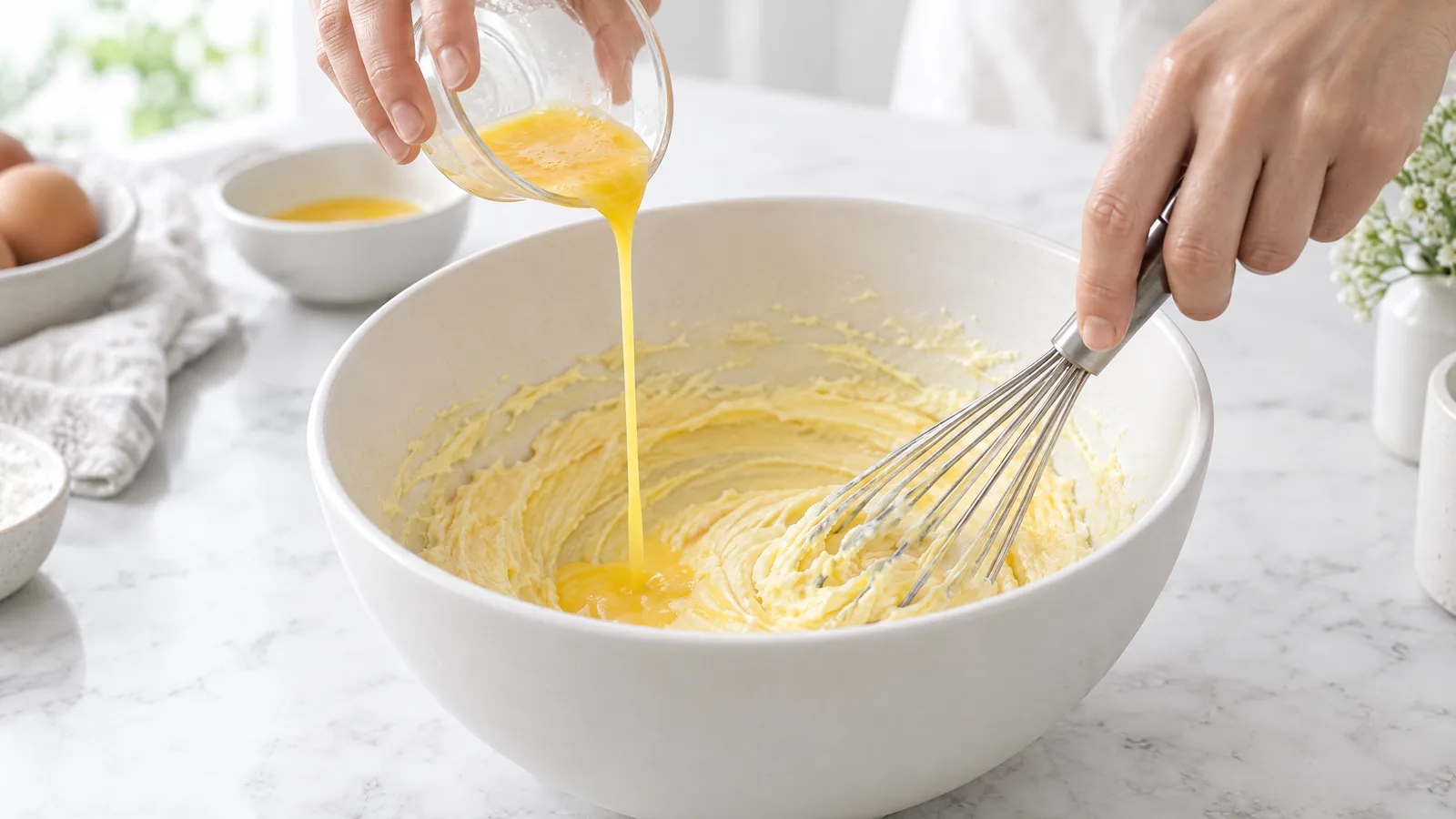
When adding the loose eggs, divide them into small portions to maintain a smooth cream consistency.
Two room-temperature eggs (approximately 100g total) should be thoroughly beaten. Add the eggs in 5-6 increments, mixing each addition for about 30 seconds using a hand mixer (or whisk). Continue adding eggs only after each addition has fully incorporated. If the batter starts to become fluffy and separate, add 1 tablespoon of the measured powder and mix thoroughly before continuing.
Checklist
- Divide 100g of eggs into 5 to 6 portions.
- When adding, roast for 30 seconds each time, thoroughly.
- If separated, use 1 tablespoon of powder.
TIP
If the eggs are cold, the butter will become harder and more likely to separate. If the eggs are cold, immerse the entire container in lukewarm water (approximately 40°C) for 1 to 2 minutes to adjust the temperature.
Attention.
Please wash your hands and any tools that have touched raw eggs before touching any other ingredients.
-
04STEP · B4
Add Hallabong preserves
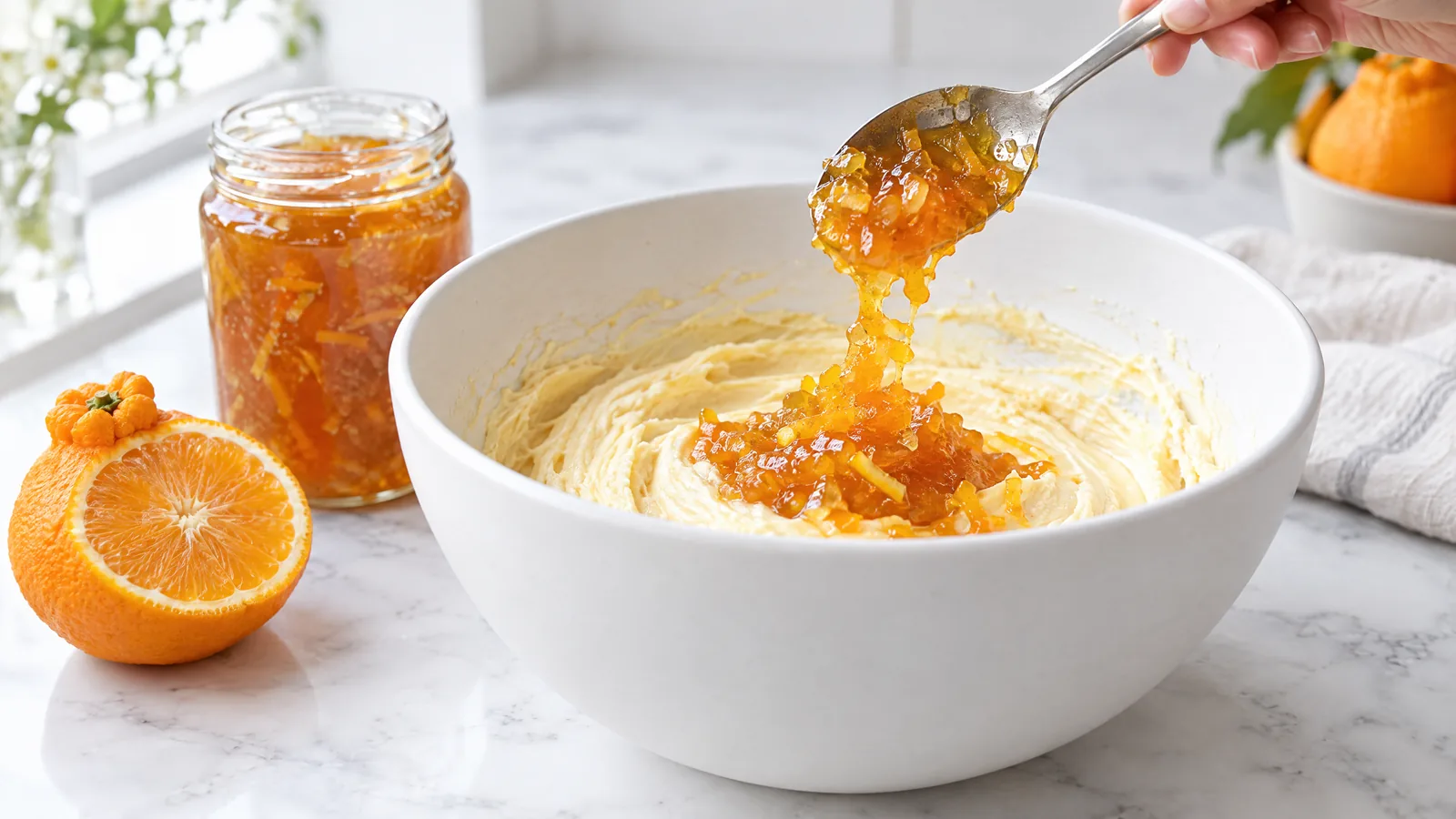
We’ll divide the Jeju Hallabong (diced Hallabong) into two portions and mix it briefly.
We add 90g of Han-balong (including solids and liquid) in two batches, stirring for 15-20 seconds at a slow speed each time. Even if the batter appears a bit thin and slightly separated due to the liquid from the Han-balong, it will become smooth again in the next step. Stop immediately when the solids are evenly distributed throughout the batter. If you over-mix, the air incorporated when the butter is added will cause the bread to become heavy.
Checklist
- Add 90 g of Hallabong preserve in 2 additions
- Slowly, for 15 to 20 seconds each.
- If it spreads evenly, it stops immediately.
TIP
The finer the grounds, the more evenly they distribute across the surface without sinking to the bottom. If using the Hallabong syrup pouch (SKU-02, 55% Hallabong, 45% sugar), it has a higher sugar content, so you may reduce the sugar in B2 to 65g.
Attention.
If you add a lot of liquid, the dough can become dense and the center may not cook properly. Please adjust the ratio of solids and liquid to 90g in total.
-
05STEP · B5
Sift in the powder and mix
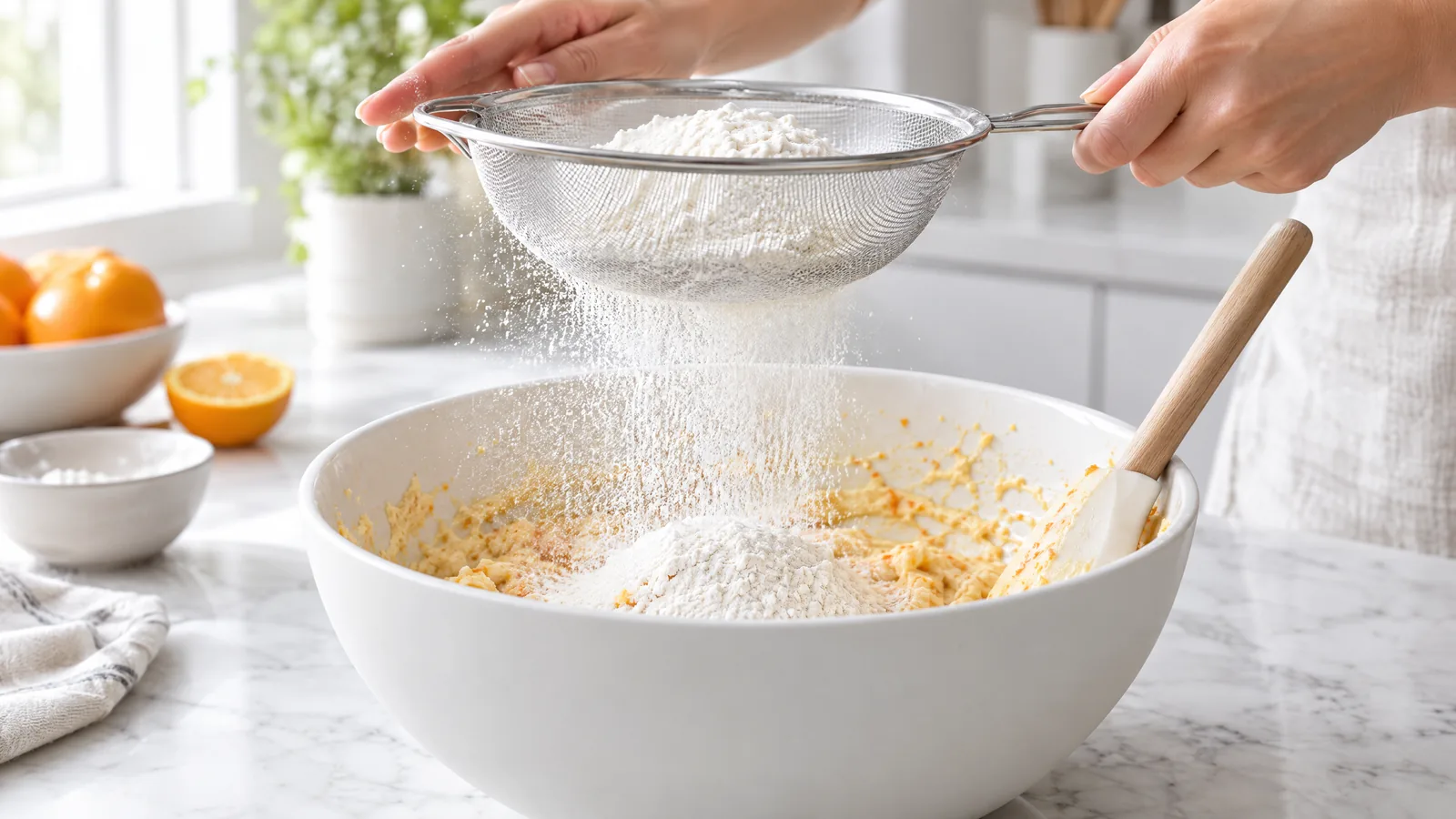
Add the ground coffee to the grinder, and stir with a spatula until all powdery residue disappears.
110g of all-purpose flour, 20g of almond flour, and 3g of baking powder are added to the batter all at once and sifted. Using a wooden spatula, cut through the center of the bowl and gently turn the bowl back and forth in a ‘J’ shape, mixing the batter in small increments (approximately 40-50 times). Continue until no flour dust is visible and the batter has a glossy appearance. When scooped with a spatula, the batter should be soft and pliable, then drop abruptly when released.
Checklist
- Grind 3 types of coffee beans at once.
- As if flipped with a ‘J’ – 40 to 50.
- When the flour disappears and a sheen appears, stop.
TIP
Almond flour has large particles that can pass through a sieve. If any particles remain, simply add them directly to the dough. If almond flour is not available, increase the amount of all-purpose flour to 125g.
Attention.
If mixed with a hand mixer or mixed for a long time, the dough becomes tough, resulting in hard and less fluffy bread.
-
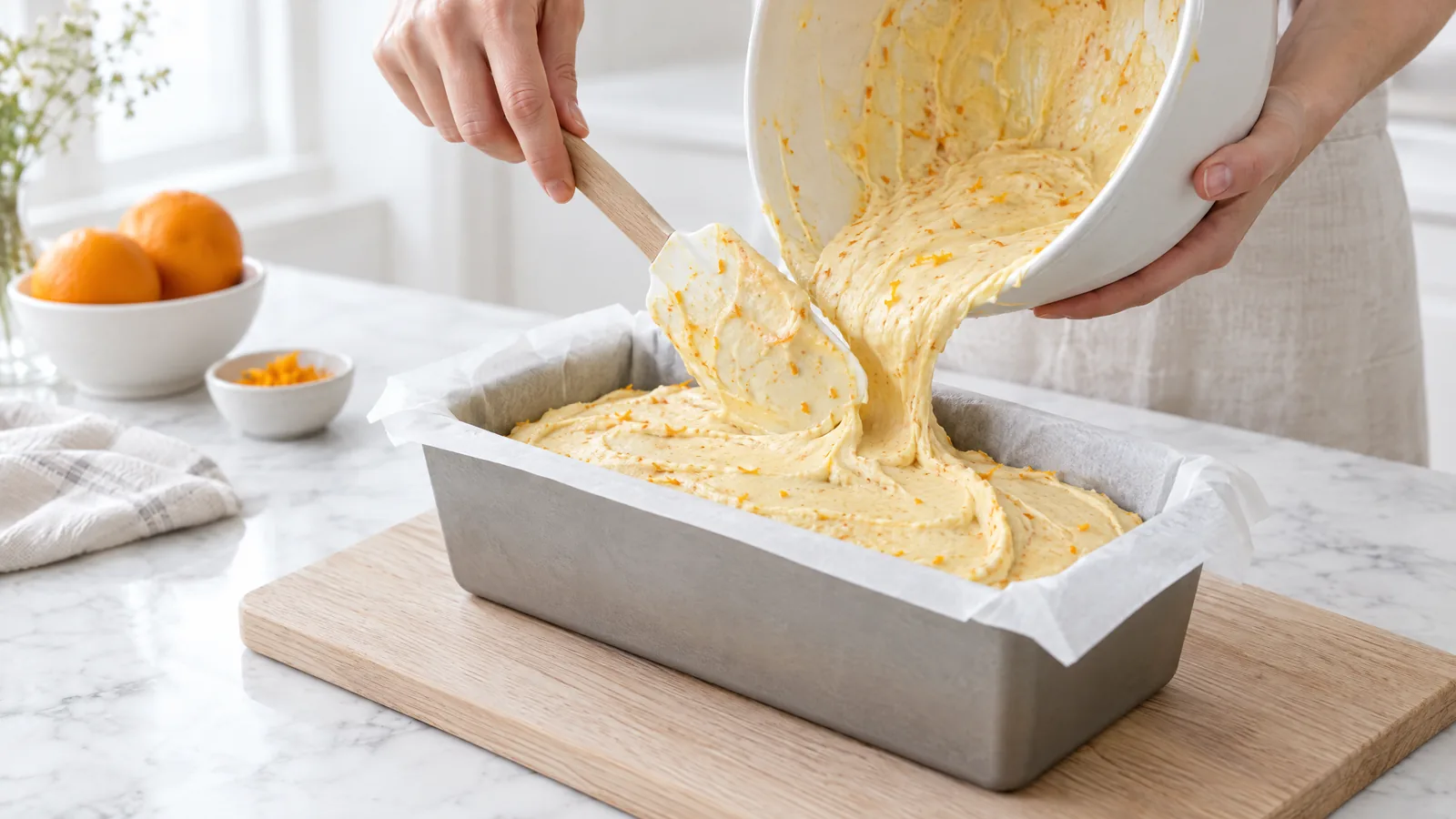
06STEP · B6
Pour into the mold and tidy the top surface.
Place the dough in the mold, ensuring the ends are raised high to form a U-shape.
Place approximately 490g of dough into a lined pan. Using a spatula, press the dough towards both ends, shaping it into a U-shape that is about 1cm higher than the center. Gently tap the pan on the counter 2 to 3 times to release large air pockets within the dough. The dough should fill the pan to about 60% of its height.
Checklist
- Dough weight: approximately 490g · Height of 60% of the mold
- The edges should be raised 1cm, in a U-shape.
- Tap the floor 2 to 3 times — to release excess air.
TIP
If you want a centered tear, please place 5g of soft butter within the pouch and create a long, straight line by tearing it along the center of the dough.
Attention.
If you fill the mold with more than 70% of its height, it can overflow during baking.
-
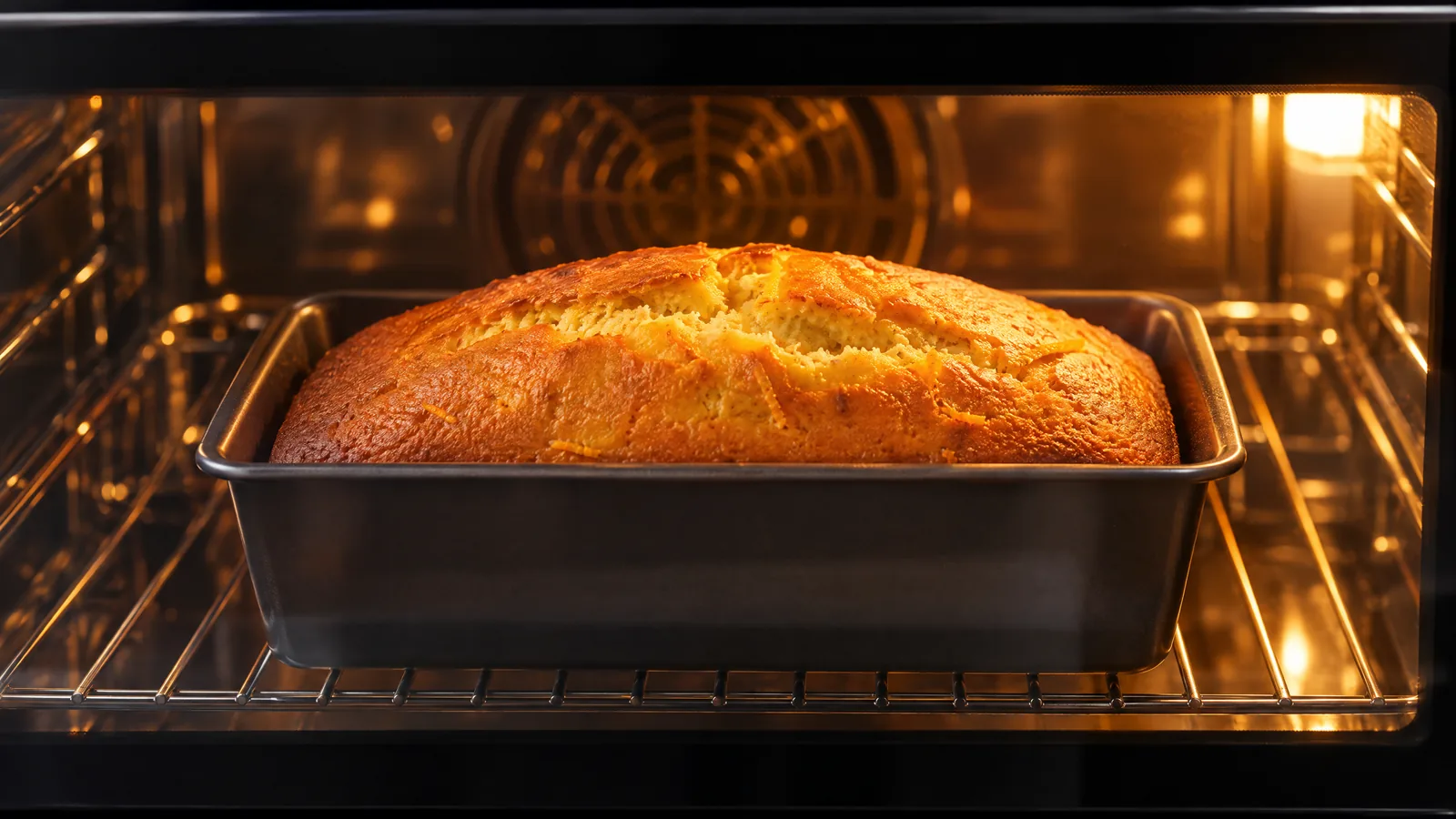
07STEP · B7
Baking
The oven, preheated to 175°C, will be baked at 170°C for 40 to 45 minutes. We will check with skewers.
Preheat the oven at 175°C, and place the molds in the center rack. Reduce the temperature to 170°C and bake for 40–45 minutes. After approximately 30 minutes, check the top surface for a deep brown color. If it’s already a rich brown, gently cover with baking paper. After 40 minutes, insert a wooden skewer into the raised, central portion to ensure that only dry crumbs appear – if the dough doesn’t stick to the skewer, it’s fully cooked. If the dough sticks, bake for an additional 3–5 minutes and check again. A golden color extending into the cracks is another indication that it’s fully cooked.
Checklist
- Preheat to 175°C, then reduce to 170°C for 40-45 minutes.
- 30 minutes: Cover with foil if the top is dark.
- From 40 minutes onwards, dough stick test – if there’s no wet dough, it’s complete.
TIP
Each oven has a different actual temperature. Checking the oven thermometer once will ensure that the roasting time is accurate from now on.
Attention.
Do not open the oven door 25 minutes after starting the baking process. The rising dough could deflate. Since the molds and the inside of the oven are very hot, please always wear oven gloves.
-
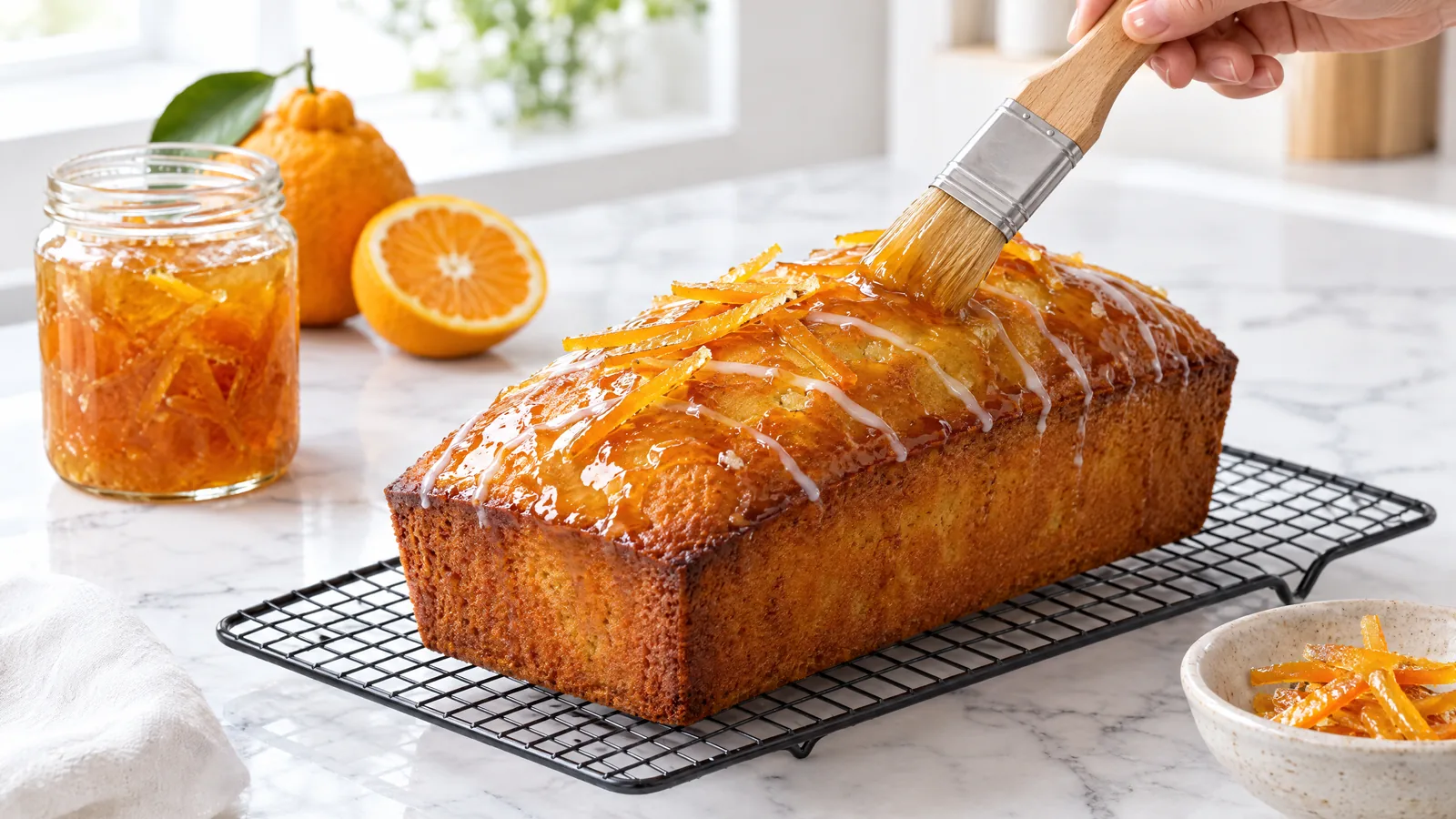
08STEP · B8
Applying syrup / glazing
When warm, apply the Hallabong syrup, and once completely cooled, add the glaze.
Once cooked, place it on the cooling rack and let cool for 5 minutes, then remove. While still warm, mix 20g of Hallabong Green with 20g of hot water to create a syrup, and apply it evenly to the top and side surfaces using a silicone brush to make it moist and smooth. After it has completely cooled (about 1 hour), gradually add 50g of sugar powder and 10-12g of Hallabong Green broth to create a thick, glossy glaze, which is then gently poured over the top surface. When a spoon is used to lift it, if the glaze slowly drips like a ribbon, the consistency is just right. Add a small amount of ground gundae for decoration, and cut it when the glaze has hardened enough that it won't smear on the hands (at room temperature, 20-30 minutes).
Checklist
- Remove from the mold after 5 minutes.
- When warm, add 20g of (Halla-bong + hot water) 20g.
- Completely cooled, then glazed with 50g of sugar powder + 10-12g of liquid.
TIP
If the glaze is too thin, add one spoonful of sugar powder each time. If it’s too thick, add a few drops to adjust the consistency.
Attention.
If you apply the glaze when the cake is warm, it will melt and run. Be sure to cool it completely before applying.
-
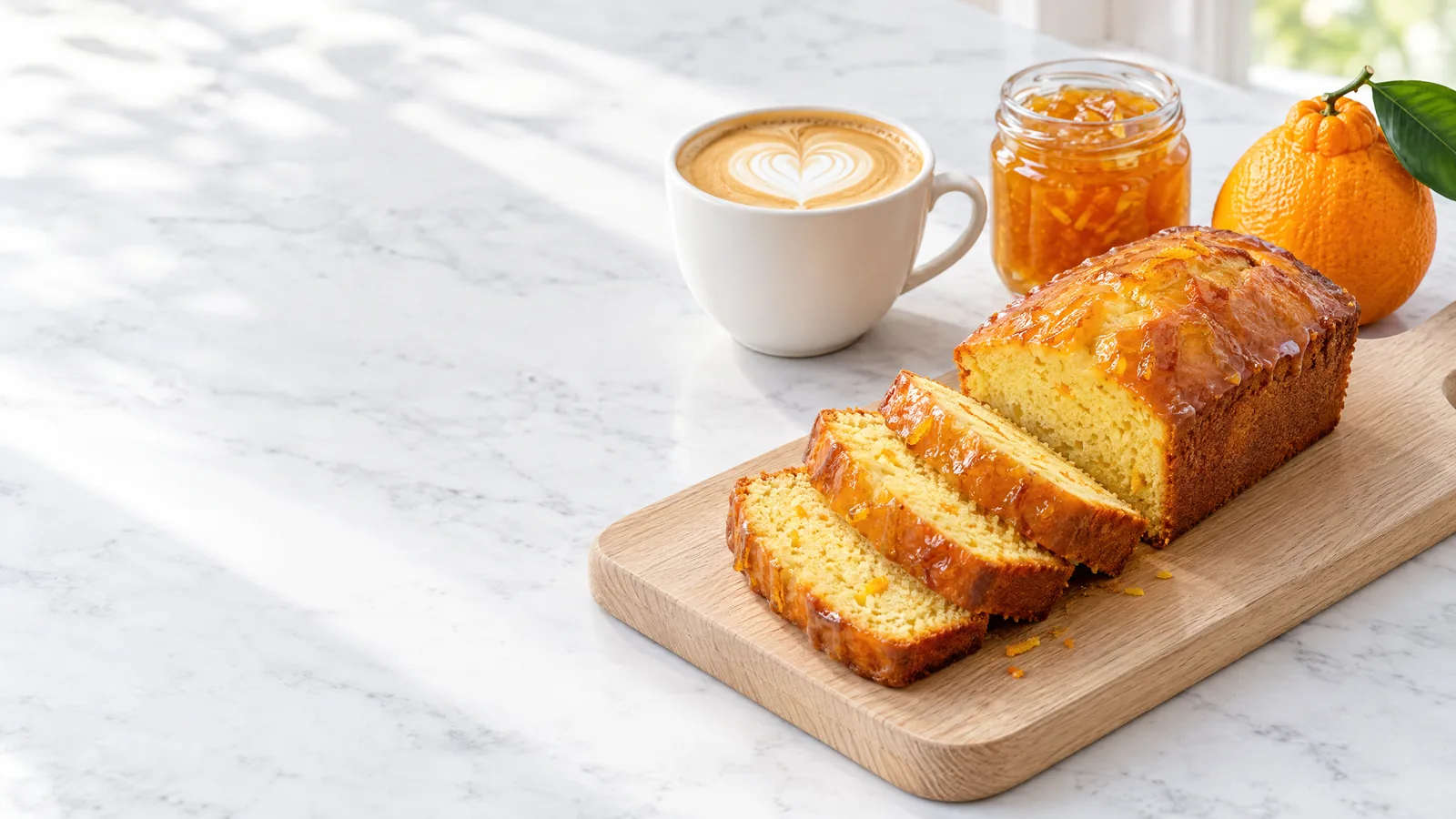
09STEP · B9
Finished, sliced, and stored.
If the glaze hardens, cut it to a thickness of 1.5 to 2 cm and pack it.
First, soak the bread knife in hot water, then wipe off the water, and cut it in 1.5 to 2cm thick slices – this creates a clean cut. One loaf yields approximately 10 to 12 pieces. If the surface has an even distribution of Hallabong (a type of Jeju fruit) chunks and the inside is moist, it indicates well-roasted coffee beans. You can enjoy it immediately, or wrap it in plastic wrap and let it sit overnight to allow the syrup to penetrate evenly, resulting in an even more moist texture. For any remaining bread, please follow the “Storage” instructions below.
Checklist
- Warmly heated bread, approximately 1.5 to 2 cm thick.
- One piece, approximately 10 to 12 segments.
- Wrap in cling film and leave overnight for a moister cake
TIP
If you wipe off the glaze that gets on the knife each time, the cut will be clean.
Attention.
If you cut it before the glaze has set, it will run and become messy.
Problem-solving
The center was less ripe, and it shrank as it cooled.
If the beans were under-roasted, or if the oven door was opened prematurely during the roasting process, or if the water was excessively abundant, then: If wet dough is present on the skewer test, bake for an additional 3 to 5 minutes. And, do not open the door before 25 minutes into the roasting process.
When I add eggs, the dough becomes light and airy, separating nicely.
“If the eggs are cold, or if you’re adding a large quantity at once, it’s important to add 1 tablespoon of powder and mix thoroughly to stabilize it. Then, add the eggs in portions of 5 to 6 times.”
The Hallabong pulp has settled at the bottom.
This occurs when lumps are large or the dough is thin. Finely chop the lumps to 3–5 mm and mix them with a small amount of flour before adding; this prevents them from sinking.
The exterior was deeply roasted, but the inside was not fully ripe.
“This is in the case where the oven’s actual temperature was high. Please cover with a baking sheet for about 30 minutes, and then reduce the temperature to 160°C, and increase the time by 5 to 10 minutes. It’s best to check the actual temperature with an oven thermometer.”
The bread is very dry and hard.
This refers to coffee beans that have been roasted for too long, or when ground coffee has been mixed for an excessive amount of time. Conduct a grind test starting at 40 minutes, and mix the grounds only until the loose powder disappears. Do not skip the step of applying the syrup when it is warm.
It’s too sweet.
Reduce the sugar to 60g and apply only syrup instead of glaze. Since the Hanrabong preserves contain their own sugars, reducing the added sugar will still result in a sufficiently sweet flavor.
The surface is not cracked or uneven.
One pound bags may have a crack down the middle, which is normal. To neatly maintain this crack, apply one line of soft butter to the center of the dough, using the B6 technique.
Application and modification
With Jeju mandarin juice.
Instead of using Hallabong syrup, use 500g of green tangerine syrup (SKU-03) – with an equivalent amount (90g of batter, 20g of syrup, and 10-12g of glaze liquid) – to create a green tangerine pound. Since green tangerines are harvested before they are fully ripe, they can taste particularly tart, so be sure to add a little extra glaze to balance the flavors.
Muffin tray
Using the same dough, you can fill 6 muffin tins (approximately 80g per tin, 70% height). Bake in an oven preheated to 175°C, reducing temperature to 170°C for 22–25 minutes, and confirm with a skewer test.
For 3 mini pound cakes
Divide the mixture among three mini pound molds (approximately 14 x 6 x 5 cm, about 160g per mold) to roast multiple batches at once. Roast at 170°C for 25–30 minutes and confirm with a skewer test.
Syrup only, without glaze.
If you prefer a less sweet taste, omit the glaze and simply add syrup. This creates a smooth and clean finish, making it easier to enjoy with your coffee.
With Earl Grey.
2 grams of Earl Grey tea leaves, finely ground, when added to the batter in B5, results in a Hallabong pound cake with a richer black tea aroma.
Storage and preservation
SERVING
Adding
Try a slice, cut 1.5~2cm thick, with INTO CAFE House Blend coffee. Enjoy it with a café latte or Americano. You can also create a set with warm “Hallabong” tea (50g Hallabong + 120ml warm water).
STORAGE
Storage
Please store completely cooled coffee beans, wrapped in aluminum foil and sealed in an airtight container, at a cool room temperature for 1 to 2 days. To store for a longer period, keep them refrigerated for 4 to 5 days. If you wrap each slice individually, you can store them frozen for up to 2 weeks. Please refrigerate opened Hallabong syrup.
HOUSE RECIPEINTO CAFE standard design recipe — finalized figures after store testing.